

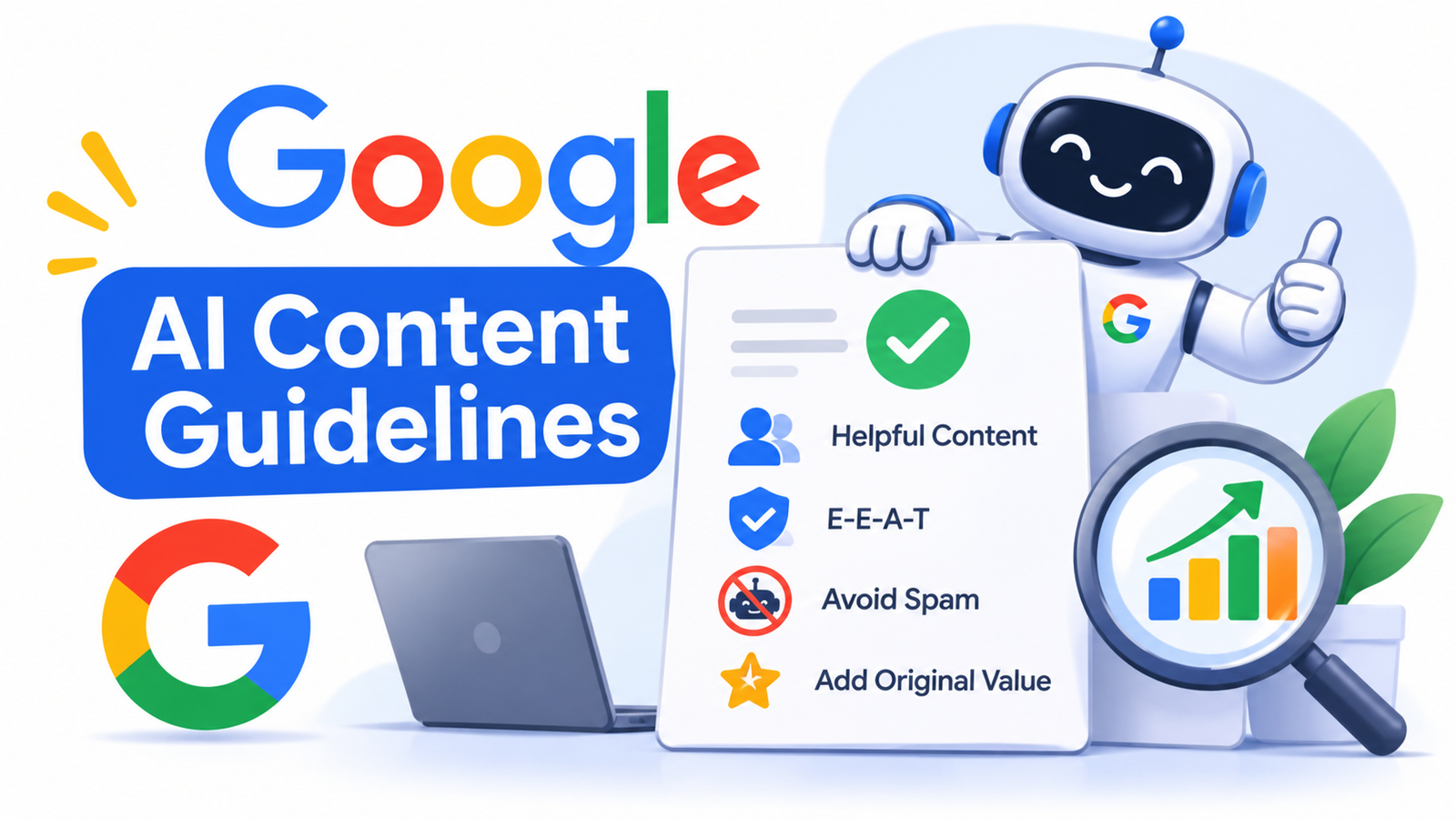
Google’s New AI Content Guidelines: How to Use AI Without Hurting Your SEO
By Mitali Purkait Ghosh on November 27, 2026
If you use AI to create content for your business, you have probably wondered whether Google is quietly keeping score.
The good news is that Google’s latest guidance doesn’t say you need to stop using AI. In fact, Google says generative AI can be useful for topic research and adding structure to original content. The problem starts when AI becomes a shortcut for producing large amounts of low-value content.
As a digital marketing agency, we know how critical this distinction is. We see AI as a useful assistant. It can help you research, organize ideas, and get a first draft moving. But it cannot replace your judgment, expertise, or responsibility for what goes on your website.
Google’s October 1, 2026 update makes that point even clearer. Accuracy, quality, relevance, and added value matter more than whether AI was involved.
So, how should you use AI for SEO content now? Let’s break it down.
What Changed in Google’s October 1 Guidance on Generative AI Content?

Google updated its generative AI content guide on October 1, 2026, in line with its Search Quality Rater Guidelines. According to it, AI can help with researching topics and structuring original content. However, Google stresses the importance of checking AI-generated output for accuracy, quality, and relevance.
The update doesn’t introduce a blanket ban on AI-written content. Instead, it reinforces the need for meaningful human oversight. Metadata, including titles and descriptions, must also be accurate.
Google also warns against producing large volumes of pages without adding value. This can fall under its scaled content abuse policy. For a practical look at what these changes mean for content creators, read our guide to Google’s guidelines for AI content.
AI Content vs. AI Spam: Where Does Google Draw the Line?
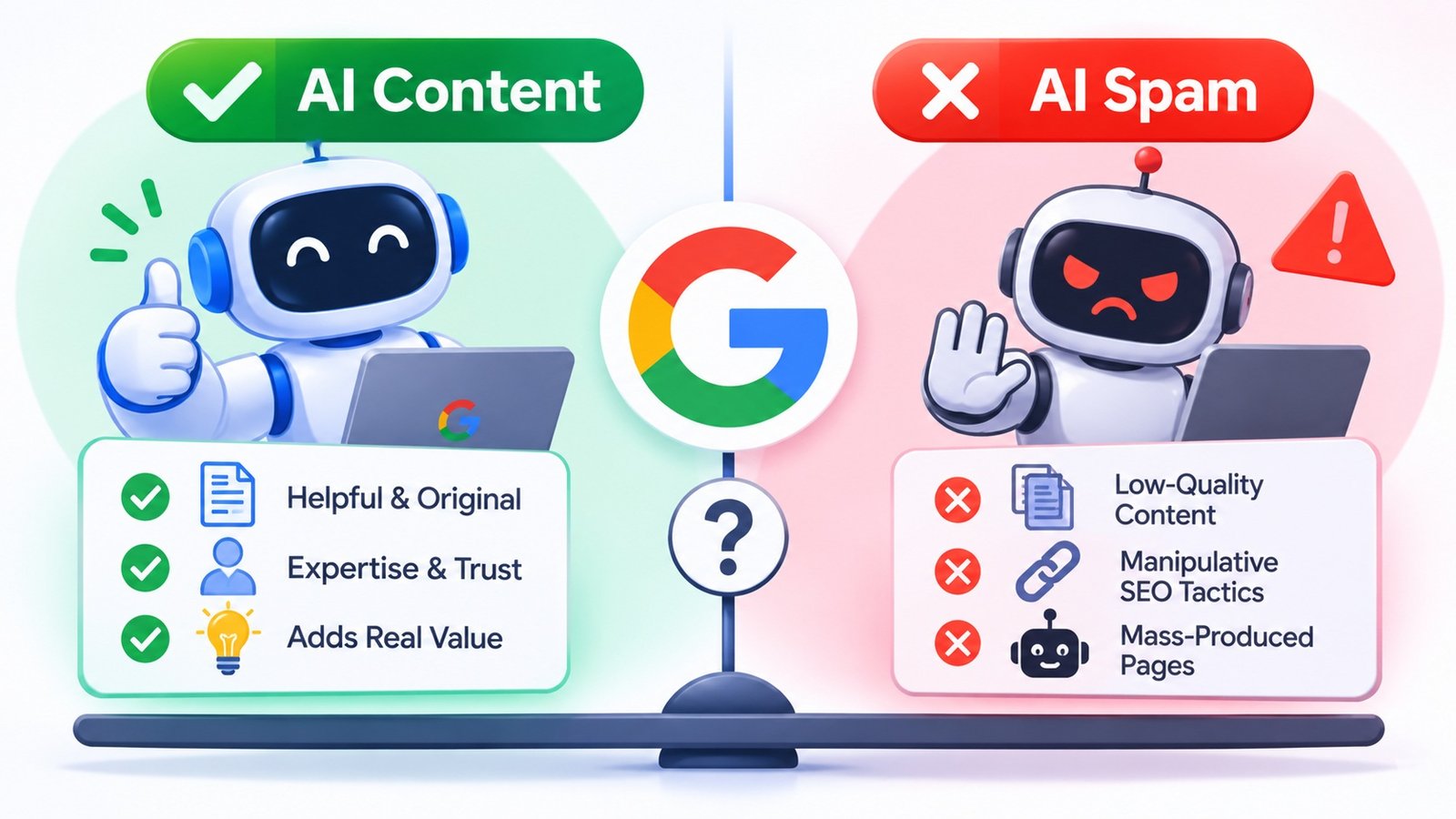
The easiest way to understand Google’s position is to separate AI-assisted content from AI spam.
AI-Generated Doesn’t Automatically Mean Low Quality
Using AI doesn’t automatically make a piece of content useless. You could use AI to organize research, create an initial outline, turn your notes into a rough draft, or suggest questions you haven’t considered. Then you can add your own experience, verify the facts, rewrite weak sections, and make the final piece genuinely useful.
This is very different from asking an AI tool to create 500 articles, publishing them with minimal review and hoping a few rank.
Google’s own guidance focuses on whether content is helpful, original, accurate, and created for people. Its people-first documentation also asks whether content provides original information, analysis, or research and whether it offers substantial value compared with other pages in Search.
If you’re still hearing that “Google penalizes AI content,” it’s worth separating that myth from what Google actually says. Our article on generative AI search myths covers some of these misconceptions in more detail.
When AI Content Becomes a Problem

AI-assisted content becomes risky when the process looks something like this:
- Produce large amounts of content quickly
- Add little or nothing original
- Skip meaningful editorial review
- Repeat information already available everywhere
- Write mainly because a keyword has search volume
- Publish primarily to manipulate rankings
The last point is important. Google penalizes bulk-generated content that manipulates search results rather than helping readers. It doesn’t matter if it was written by AI, human writers, or a combination of both. If it’s made for algorithms instead of real people, it violates their policy.
So, using AI isn’t a loophole around Google’s spam policies. As we explain in our blueprint for generative AI SEO, no magic shortcut replaces good SEO fundamentals.

Mitali Purkait Ghosh, the Co-Founder of Digital Concepts, brings a wealth of knowledge and innovation to the marketing sphere. Mitali and her dedicated team offer unparalleled expertise in digital marketing and content writing, among other key online strategies.
Popular Posts
 Top 12 Digital Advertising Platforms to Go for Boosting Brand Awareness in 2024
- Selling Fragrances Online? Implement These Steps to Make Your Success Smell Irresistible
- How to Use Color Theory in Poster Design?
- 2026 Content Writing Trends: Stay Ahead With These Essential Insights
- How to Harness SEO To Boost Your Company’s Online Reputation?


